

Single API vs Multiple Integrations: The True Cost of Payment Complexity
Choosing between a single payment API and multiple payment integrations is one of the most consequential technical decisions a business can make. While integrating multiple payment service providers (PSPs) might seem like a path to redundancy and optimization, the hidden costs often surprise even experienced engineering teams.
In this comprehensive analysis, we’ll uncover the true cost of payment complexity, compare single API versus multiple integration approaches, and help you make an informed decision for your business.
Why Payment Integration Strategy Matters
Your payment infrastructure directly impacts:
- Conversion rates – Poorly implemented payments cost sales
- Operational costs – Maintenance drains engineering resources
- Time to market – Delays launching in new markets
- Customer experience – Failed transactions frustrate users
- Business agility – Legacy integrations slow innovation
Understanding these trade-offs is essential for long-term success. Let’s explore what we’ve learned about what payment orchestration really means for modern businesses.
The Hidden Costs of Multiple Payment Integrations
Most companies underestimate the total cost of ownership (TCO) when they decide to integrate multiple payment providers. Here’s the breakdown:
1. Development Costs
Initial Integration Time:
- Each PSP integration: 2-4 weeks of engineering time
- Stripe: ~2 weeks
- Adyen: ~3-4 weeks
- PayPal: ~2 weeks
- Regional providers (e.g., PIX in Brazil): 3-6 weeks each
Multiplied across providers: A business integrating 5 PSPs faces 10-20 weeks of initial development.
2. Maintenance Burden
Payment integrations aren’t “set and forget.” Each provider requires:
- API version updates (quarterly for most)
- Security patches and certificate renewals
- Breaking change management
- Documentation updates
- Test suite maintenance
Annual maintenance cost per integration: 4-8 weeks of engineering time. For 5 providers, that’s 20-40 weeks annually—nearly a full-time engineer.
3. Opportunity Costs
Engineering time spent on payment maintenance is time not spent on:
- Core product features
- Customer-requested improvements
- Competitive differentiation
- Market expansion
This invisible tax compounds quarter over quarter.
4. Operational Complexity
Multiple integrations create operational headaches:
- Monitoring: Different dashboards for each provider
- Reconciliation: Multiple settlement reports to consolidate
- Support: Multiple relationships to manage
- Compliance: Different PCI DSS requirements per provider
- Reporting: Fragmented data requiring ETL pipelines
5. Failure Multiplication
With multiple integrations, failure modes multiply:
- Provider A’s outage requires manual failover
- Provider B’s API change breaks checkout
- Provider C’s fraud filter false-positives legitimate customers
Each additional provider adds another potential point of failure. Learn more about how cascading payments can help prevent lost sales.
The Single Payment API Alternative
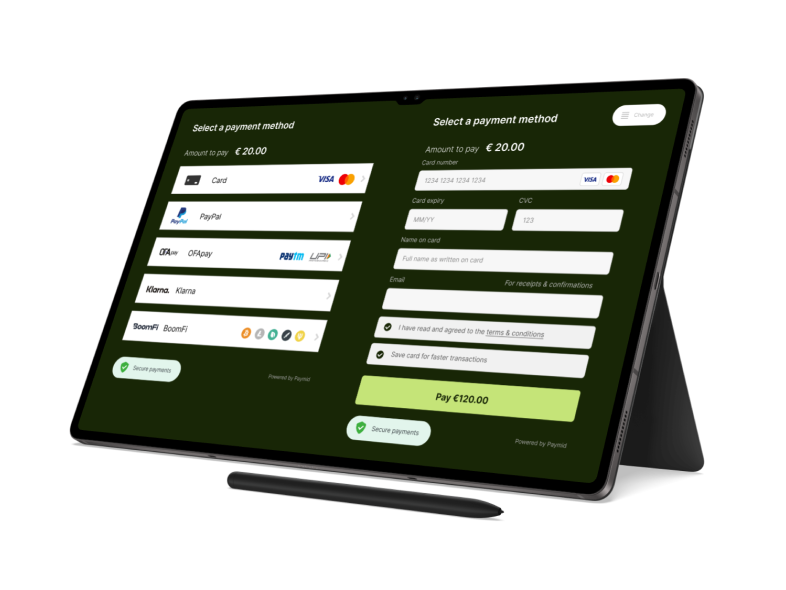
A single payment API—delivered through payment orchestration—offers a fundamentally different approach. Instead of integrating each provider separately, you integrate once with an orchestration layer that manages multiple providers behind the scenes.
How Single API Payment Orchestration Works
When you use a payment orchestration platform like Paymid:
- You integrate once with Paymid’s unified API
- Paymid maintains connections to 700+ payment methods
- Smart routing automatically selects the optimal provider
- You get one dashboard, one reconciliation process, one relationship
Key Benefits of Single API Approach
1. Dramatically Reduced Integration Time
Single API: 1-2 weeks total
Multiple integrations: 10-20 weeks
Time saved: 8-18 weeks
2. Lower Maintenance Burden
Instead of maintaining integrations to 5+ providers:
- One API to monitor
- One set of documentation to track
- One test suite to maintain
- One point of contact for support
Annual maintenance: 1-2 weeks instead of 20-40 weeks
3. Built-In Intelligence
Modern orchestration platforms include:
- Smart routing: Automatically route transactions to the best-performing provider
- Automatic retries: Instantly retry failed transactions with fallback providers
- Real-time optimization: Learn from transaction patterns to improve routing
Learn how AI is revolutionizing payment routing in 2026.
4. Instant Access to New Markets
Want to accept payments in Brazil? With multiple integrations, you’re looking at weeks of work. With a single API through an orchestration platform, you simply enable PIX and Boleto in your dashboard—often live within hours.
Explore our guide to 700+ payment methods for global commerce.
5. Centralized Data and Analytics
Instead of logging into 5 different dashboards:
- Unified reporting across all providers
- Cross-provider analytics and benchmarking
- Single source of truth for financial data
- Comprehensive transaction history
Cost Comparison: Single API vs Multiple Integrations
Year 1 Costs (Example: E-commerce Business with 5 PSPs)
| Cost Category | Multiple Integrations | Single API (Orchestration) |
|---|---|---|
| Initial Development | $75,000 – $150,000 | $10,000 – $20,000 |
| Year 1 Maintenance | $50,000 – $100,000 | $5,000 – $10,000 |
| Payment Provider Fees | 2.9% + $0.30/transaction | 2.9% + $0.30/transaction + 0.3% orchestration |
| Operational Overhead | $30,000 – $50,000 | $5,000 – $10,000 |
| Total Year 1 (excl. processing) | $155,000 – $300,000 | $20,000 – $40,000 |
Note: Orchestration platform fees are typically 0.2-0.5% on top of payment processing fees, but the savings in development and maintenance often offset this cost entirely.
3-Year Total Cost of Ownership
Over three years, the cost differential becomes even more pronounced:
- Multiple integrations: $350,000 – $650,000 in development and maintenance
- Single API approach: $50,000 – $100,000 in integration and orchestration fees
- Savings: $250,000 – $550,000 over 3 years
When Multiple Integrations Might Make Sense
Despite the complexity, there are scenarios where managing multiple integrations directly might be appropriate:
1. Massive Scale with Dedicated Teams
Companies like Uber or Airbnb have dedicated payment engineering teams of 50+ engineers. For them, the customization benefits might outweigh the complexity costs.
2. Unique Regulatory Requirements
Some highly regulated industries may require direct PSP relationships or custom compliance implementations.
3. Existing Legacy Infrastructure
If you’ve already built and paid for multiple integrations, the switching cost might not be justified until a major platform migration.
4. Simple Payment Needs
If you’re only selling in one country with one payment method, a single Stripe integration might be all you need—no orchestration required.
When Single API Orchestration Wins
For most businesses, a single API approach through payment orchestration is the clear winner:
✅ Growing E-commerce Businesses
Expanding into new markets? Avoid the integration treadmill. A single API gives you instant access to local payment methods worldwide.
Learn more about how payment orchestration reduces failed transactions.
✅ SaaS Companies
Focus your engineering team on product features, not payment plumbing. The subscription billing complexity alone makes orchestration valuable.
✅ Marketplaces
Multi-party payments, split transactions, and vendor payouts are complex enough without managing multiple PSP integrations.
✅ High-Volume Merchants
Smart routing across multiple providers can significantly reduce fees and improve authorization rates—benefits you get automatically with orchestration.
✅ Global Businesses
Supporting 50+ countries with local payment methods would require dozens of direct integrations. A single API makes global expansion manageable.
Real-World Impact: A Case Study
Consider a mid-sized e-commerce company selling globally:
Before: Multiple Direct Integrations
- Integrated with Stripe, Adyen, PayPal, and 3 regional providers
- Engineering team spent 30% of time on payment maintenance
- Adding a new market took 4-6 weeks
- Fragmented reporting made optimization impossible
After: Single API with Orchestration
- One integration with Paymid
- Engineering time on payments: 5%
- New market activation: 1-2 days
- Unified analytics revealed 15% cost savings opportunity
- Authorization rates improved by 12% through smart routing
Result: 70% reduction in payment-related engineering time, 12% improvement in authorization rates, and ability to launch in new markets in days instead of weeks.
Making the Decision: A Framework
Use this decision framework to evaluate your situation:
Calculate Your Integration Burden
- How many PSPs do you currently integrate (or plan to)?
- How many engineering hours per quarter go to payment maintenance?
- What’s the fully-loaded cost of those engineering hours?
- How often do you need to add new payment methods or markets?
Assess Your Growth Trajectory
- Are you planning international expansion?
- Do you need to support diverse payment methods?
- Is payment optimization a competitive priority?
- Could your engineering team deliver more value elsewhere?
Evaluate Solutions
Compare the costs of:
- Continuing with multiple direct integrations
- Building internal orchestration (usually a bad idea)
- Using a dedicated payment orchestration platform
The Migration Path: Moving to a Single API
If you’re currently managing multiple integrations, migration to a single API is straightforward:
Phase 1: Parallel Implementation (Weeks 1-2)
- Integrate with Paymid alongside existing providers
- Route a small percentage of traffic to test
- Validate functionality and performance
Phase 2: Gradual Migration (Weeks 3-4)
- Shift traffic progressively from direct integrations to orchestration
- Monitor authorization rates and error rates
- Tune routing rules based on performance data
Phase 3: Full Cutover (Week 5)
- Route 100% of traffic through orchestration layer
- Maintain direct integrations as backup during transition period
- Decommission direct integrations once stable
Phase 4: Optimization (Ongoing)
- Enable smart routing rules
- Add new payment methods as needed
- Monitor analytics and continuously optimize
Key Takeaways
The decision between single API and multiple payment integrations isn’t just technical—it’s strategic:
- Multiple integrations create hidden costs that compound over time through maintenance, operational overhead, and opportunity cost.
- A single API through orchestration dramatically reduces complexity while adding intelligent features like smart routing and automatic retries.
- The break-even point typically comes when you’re managing 3+ providers or expanding internationally.
- Engineering time is your most valuable resource—spend it on your product, not payment plumbing.
- Future-proof your payment infrastructure with a platform that makes adding new providers and methods trivial.
Conclusion
Payment complexity is a tax on your engineering team and your business agility. While multiple direct integrations might seem like the path to flexibility, the reality is often a maintenance burden that drains resources and slows innovation.
A single payment API through a payment orchestration platform like Paymid offers the best of both worlds: the simplicity of one integration with the power and redundancy of multiple providers behind the scenes. You get global coverage, intelligent routing, and comprehensive analytics—without the engineering overhead.
Ready to simplify your payment stack? Contact Paymid to learn how our payment orchestration platform can reduce your complexity while improving performance.
Related Articles
- What is Payment Orchestration? The Complete Guide for 2026
- Payment Orchestration vs Payment Gateway: What’s the Difference?
- How AI is Revolutionizing Payment Routing in 2026
- 7 Ways Payment Orchestration Reduces Failed Transactions
- The Ultimate List of 700+ Payment Methods for Global Commerce
- Cascading Payments Explained: Never Lose a Sale Again

Matt Star
Matt Star is a Financial Markets professional with over 25 years experience across Institutional markets, Margin Forex, CFDs and Crypto. Located in Sydney, Matt is a well experienced and valued partner in Paymid Limited.