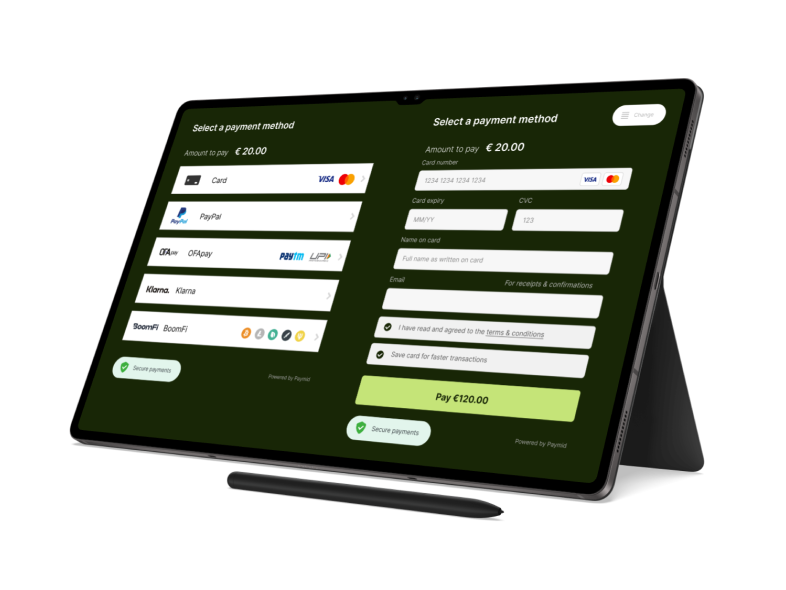


What is Payment Orchestration? The Complete Guide for 2026

In an increasingly global digital economy, payment orchestration has emerged as a critical technology for businesses looking to optimize their payment operations. But what exactly is payment orchestration, and why has it become essential for modern commerce? This comprehensive guide will explore everything you need to know about payment orchestration in 2026—from core concepts to implementation strategies.
Whether you’re a startup founder exploring payment options or an enterprise executive seeking to reduce costs and improve authorization rates, understanding payment orchestration will help you make informed decisions about your payment infrastructure.
What is Payment Orchestration?
Payment orchestration is a technology layer that sits above multiple payment service providers (PSPs), gateways, and acquirers, intelligently routing transactions to the optimal provider for each specific transaction. Rather than relying on a single payment gateway, businesses using payment orchestration connect to a centralized platform that makes real-time decisions about payment routing, failover, and optimization.
Think of payment orchestration as an intelligent traffic management system for your payments. Just as a smart city routes cars across multiple bridges based on real-time congestion, payment orchestration routes transactions across multiple providers based on success rates, costs, geography, and other factors.
Unlike traditional payment setups where you’re locked into a single provider, payment orchestration gives you the flexibility to work with multiple processors while maintaining a single integration point. This approach eliminates vendor lock-in, reduces downtime risk, and maximizes transaction success rates.
How Payment Orchestration Works
Understanding the mechanics of payment orchestration helps illustrate why it’s so powerful. Here’s how the process works:
1. Transaction Initiation
When a customer initiates a payment on your website or app, the transaction data is sent to your payment orchestration platform rather than directly to a single gateway. This includes payment method details, transaction amount, customer location, and other relevant metadata.
2. Intelligent Routing Decision
The orchestration layer analyzes multiple factors in real-time to determine the best provider for this specific transaction:
- Historical Performance: Which provider has the highest success rate for similar transactions?
- Geographic Optimization: Does the customer location favor a specific local acquirer?
- Cost Considerations: Which provider offers the best rates for this transaction type?
- Payment Method: Does the provider support the customer’s preferred payment method?
- Risk Profile: What’s the fraud risk, and which provider handles similar risk best?
- Provider Health: Are all providers operational, or is one experiencing issues?
3. Transaction Processing
The orchestration platform routes the transaction to the selected provider. If the transaction is approved, the process completes as normal. If declined, the magic of orchestration begins.
4. Automatic Failover (Cascading)
When a transaction fails, payment orchestration doesn’t give up. Instead, it analyzes the decline reason and automatically retries the transaction with alternative providers. This cascading payment process can recover 15-20% of otherwise lost transactions. Soft declines (like temporary issuer timeouts) trigger immediate retries, while hard declines might route to different acquirers with varying risk appetites.
5. Unified Reporting
All transaction data flows back to a centralized dashboard, giving you complete visibility across all providers. This unified reporting enables performance comparison, cost analysis, and strategic optimization.
Key Components of Payment Orchestration
A comprehensive payment orchestration platform includes several essential components:
Smart Routing Engine
The routing engine is the brain of the orchestration platform. It uses machine learning algorithms to continuously optimize routing decisions based on historical performance data. The best routing engines consider 40+ data points to make optimal decisions for each transaction.
Multiple Provider Connections
Payment orchestration connects to multiple PSPs, gateways, and local acquirers. This might include global providers like Stripe and Adyen, regional specialists for local acquiring, and alternative payment method providers for wallets, bank transfers, and BNPL options.
Retry Logic and Cascading
Sophisticated retry logic analyzes decline codes to determine the optimal retry strategy. Different decline reasons warrant different approaches—some should retry immediately, others should route to different providers, and some shouldn’t retry at all.
3D Secure Orchestration
Modern orchestration platforms manage 3D Secure 2.0 authentication intelligently, applying strong customer authentication only when necessary. This balances security requirements with conversion optimization, challenging suspicious transactions while allowing trusted customers to complete purchases frictionlessly.
Token Vault
A centralized token vault securely stores customer payment credentials, enabling one-click checkout and recurring billing while reducing PCI compliance scope. The best orchestration platforms maintain token compatibility across multiple providers.
Analytics and Reporting
Comprehensive analytics provide insights into approval rates, costs, and performance by provider, region, payment method, and time period. This visibility enables data-driven optimization and strategic decision-making.
Benefits of Payment Orchestration
The advantages of payment orchestration extend across multiple business dimensions:
Higher Authorization Rates
By routing transactions to the provider most likely to approve them and automatically retrying failures, payment orchestration typically improves authorization rates by 3-8%. For a business processing $10 million monthly, a 3% improvement equals $300,000 in additional revenue.
Reduced Costs
Payment orchestration enables cost optimization by routing transactions to the most cost-effective provider for each scenario. Additionally, local acquiring through regional providers often reduces interchange fees by 0.5-1% compared to cross-border processing.
Elimination of Single Points of Failure
With multiple providers and automatic failover, payment orchestration ensures business continuity even when individual providers experience downtime. This redundancy is critical for businesses where payment interruptions directly impact revenue.
Global Expansion Simplified
Entering new markets traditionally requires integrations with local payment providers—a process taking months per market. Payment orchestration provides instant access to 700+ local payment methods, enabling rapid global expansion with a single integration.
Vendor Independence
Payment orchestration eliminates vendor lock-in. If a provider increases prices or degrades service quality, you can easily shift volume to alternatives without rebuilding integrations. This negotiating leverage often leads to better commercial terms.
Unified Operations
Managing multiple payment providers individually creates operational complexity. Payment orchestration consolidates reporting, reconciliation, and monitoring into a single interface, reducing operational overhead.
Payment Orchestration vs Single Gateway
To understand when payment orchestration makes sense, let’s compare it to traditional single-gateway setups:
| Aspect | Single Gateway | Payment Orchestration |
|---|---|---|
| Integration Complexity | One integration, but must rebuild for additional providers | Single integration connects to unlimited providers |
| Authorization Rates | Limited to that provider’s performance | Optimized across multiple providers |
| Downtime Risk | Single point of failure | Automatic failover ensures continuity |
| Global Coverage | Limited to gateway’s supported regions | Access to 100+ countries and local methods |
| Cost Optimization | Fixed gateway fees | Route to lowest-cost provider per transaction |
| Implementation Time | Fast for first provider | Initial setup longer, but faster for subsequent providers |
| Best For | Small businesses, simple needs | Growing businesses, international operations |
Learn more about the specific differences in our detailed comparison: Payment Orchestration vs Payment Gateway.
Who Needs Payment Orchestration?
Payment orchestration isn’t for everyone, but it’s essential for certain business profiles:
High-Volume Merchants
Businesses processing 10,000+ transactions monthly benefit significantly from optimization. Even small percentage improvements in authorization rates translate to substantial revenue at scale.
Global E-commerce Businesses
Companies selling across borders need local payment methods and local acquiring to maximize conversions. Payment orchestration provides instant access to regional payment preferences without multiple integrations.
Subscription and SaaS Companies
Recurring billing businesses are especially vulnerable to payment failures. Smart retry logic and failover can significantly reduce involuntary churn, directly impacting monthly recurring revenue.
High-Risk Industries
Businesses in gaming, forex, crypto, or adult industries often struggle with payment providers. Payment orchestration distributes risk across multiple acquirers and provides access to specialized high-risk providers.
Marketplaces and Platforms
Multi-party payment scenarios require sophisticated routing and settlement capabilities. Payment orchestration handles split payments, vendor payouts, and complex money movement workflows.
AI and Machine Learning in Payment Orchestration
The latest evolution in payment orchestration leverages artificial intelligence to further optimize performance. AI-powered payment routing analyzes patterns across millions of transactions to make increasingly intelligent routing decisions.
Machine learning models can:
- Predict transaction success probability by provider with 95%+ accuracy
- Identify subtle patterns humans miss (e.g., specific BIN ranges performing better with certain acquirers)
- Dynamically adjust routing based on real-time provider performance
- Detect and prevent fraud while minimizing false positives
- Forecast optimal retry timing for failed transactions
Businesses using AI-powered orchestration see an additional 2-3% improvement in authorization rates beyond standard orchestration benefits.
Implementing Payment Orchestration: A 30-Day Roadmap
If you’re considering payment orchestration, here’s a realistic implementation timeline:
Week 1: Planning and Provider Selection
- Define business requirements and success metrics
- Select your orchestration platform (like Paymid)
- Identify primary payment providers for your key markets
- Map current payment flows and identify optimization opportunities
Week 2: Technical Integration
- Integrate with the orchestration platform API
- Configure webhook endpoints for transaction notifications
- Set up sandbox environment for testing
- Implement token vault for secure credential storage
Week 3: Provider Configuration and Testing
- Configure routing rules and cascade logic
- Set up 3D Secure settings
- Test transaction flows across all providers
- Simulate failure scenarios to verify failover
Week 4: Go-Live and Monitoring
- Launch with a percentage of traffic (gradual rollout)
- Monitor performance metrics closely
- Fine-tune routing rules based on real data
- Complete full migration once satisfied with performance
The Future of Payment Orchestration
Payment orchestration continues to evolve rapidly. Key trends shaping the future include:
Real-Time Payments Integration
As real-time payment systems like FedNow, SEPA Instant, and PIX expand globally, orchestration platforms are integrating these instant bank transfer options alongside traditional card payments.
Open Banking and Account-to-Account Payments
PSD2 in Europe and similar regulations worldwide are enabling direct bank-to-bank payments. Payment orchestration is increasingly incorporating these lower-cost alternatives.
Embedded Finance
Payment orchestration is extending beyond traditional e-commerce into embedded finance scenarios—marketplaces, SaaS platforms, and even IoT devices requiring payment capabilities.
Conclusion
Payment orchestration represents a fundamental shift in how businesses approach payment infrastructure. By moving from single-provider dependency to intelligent multi-provider management, businesses can significantly improve authorization rates, reduce costs, eliminate downtime risk, and accelerate global expansion.
While not every business needs payment orchestration today, it’s increasingly becoming table stakes for competitive e-commerce operations. As consumer expectations for seamless checkout experiences grow and global markets become more accessible, the flexibility and optimization that payment orchestration provides will only become more valuable.
For businesses processing significant payment volumes or expanding internationally, payment orchestration isn’t just a nice-to-have—it’s a strategic imperative that directly impacts the bottom line.
Ready to implement payment orchestration? Contact Paymid to learn how our intelligent payment orchestration platform can help you increase authorization rates, reduce costs, and scale globally with a single integration.
Related Resources:

Matt Star
Matt Star is a Financial Markets professional with over 25 years experience across Institutional markets, Margin Forex, CFDs and Crypto. Located in Sydney, Matt is a well experienced and valued partner in Paymid Limited.