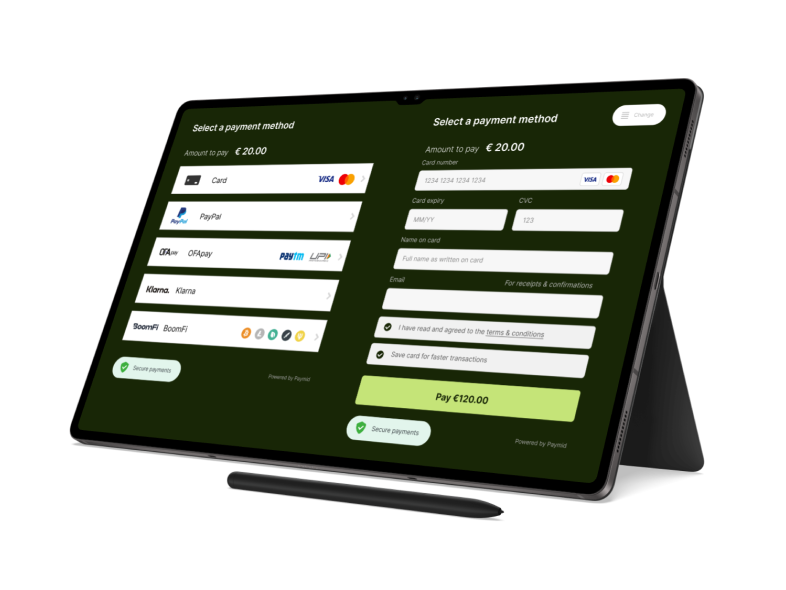


Mobile Payment Trends 2026: Wallets, QR Codes, and Beyond
The mobile payment revolution is accelerating at an unprecedented pace. With over 2.8 billion mobile wallets in use globally and mobile transactions projected to exceed $12 trillion by the end of 2026, businesses that fail to adapt to this shift risk becoming obsolete. From biometric authentication to invisible payments, the landscape is evolving faster than ever before.
This comprehensive guide explores the mobile payment trends reshaping commerce in 2026, providing merchants with actionable insights to optimize their payment strategies, enhance customer experiences, and capture their share of the mobile-first economy.
The State of Mobile Payments in 2026
Explosive Growth Continues
Mobile payments have transitioned from a convenient alternative to the dominant payment method across global markets:
- Global mobile payment volume: Projected to reach $12.3 trillion in 2026 (up from $8.9 trillion in 2024)
- Mobile wallet adoption: 2.8 billion users worldwide, representing 35% year-over-year growth
- In-store mobile payments: Now account for 42% of all retail transactions in developed markets
- Gen Z and Millennial preference: 78% prefer mobile payments over cards or cash
Regional Leaders and Emerging Markets
Asia-Pacific dominance continues: China, India, and Southeast Asian markets lead with mobile payment penetration exceeding 80% of smartphone users. China’s cashless society experiment has inspired similar initiatives across the region.
European acceleration: The EU’s Digital Payments Initiative and PSD3 regulations have accelerated adoption, with contactless mobile payments growing 65% year-over-year.
North American catch-up: The US and Canada are rapidly closing the gap, with Apple Pay, Google Pay, and Samsung Pay now accepted at over 85% of major retailers.
Emerging market leapfrogging: Africa and Latin America are skipping traditional banking infrastructure entirely, with mobile money platforms like M-Pesa, PIX, and Mercado Pago becoming primary financial services for millions.
Trend 1: Super Apps and Integrated Financial Ecosystems
The Everything App Phenomenon
Super apps—platforms that combine messaging, shopping, payments, and financial services—are redefining mobile commerce. WeChat Pay in China pioneered this model, and Western markets are finally catching up.
Key characteristics of 2026 super apps:
- One-tap payments across all services
- Integrated loyalty and rewards programs
- Embedded buy-now-pay-later options
- Investment and wealth management features
- Insurance and lending products
- Identity verification and digital credentials
Merchant Implications
Businesses must adapt to exist within these ecosystems:
- API-first integration: Ensure your payment systems can connect seamlessly with major super app platforms
- Loyalty program interoperability: Allow customers to earn and redeem points across the super app ecosystem
- Embedded checkout: Reduce friction by enabling purchases without leaving the super app environment
- Data sharing agreements: Negotiate access to customer insights while respecting privacy regulations
Case Study: A Southeast Asian ride-hailing app transformed into a super app now processes 60% of its merchant partner transactions through its integrated wallet, reducing payment friction and increasing conversion rates by 34%.
Trend 2: Biometric Authentication Goes Mainstream
Beyond Fingerprint and Face ID
While fingerprint and facial recognition are now standard, 2026 brings more sophisticated biometric authentication methods:
Emerging biometric technologies:
- Palm vein scanning: More secure than fingerprints and works with gloves
- Voice recognition: Natural authentication for voice commerce
- Behavioral biometrics: Analyzing typing patterns, swipe gestures, and device interaction
- Multi-modal biometrics: Combining multiple biometric factors for maximum security
The Death of Passwords
Traditional passwords are rapidly disappearing from mobile payment flows:
- FIDO2 and WebAuthn adoption: Passwordless authentication now standard across major platforms
- Device-bound credentials: Cryptographic keys stored in secure enclaves eliminate credential theft risks
- Biometric fallback: Even when biometrics fail, users authenticate with device PINs rather than typed passwords
Security and Conversion Benefits
Biometric authentication delivers dual benefits:
- Enhanced security: Biometric factors are unique, non-transferable, and cannot be easily stolen or phished
- Reduced friction: Authentication takes milliseconds instead of seconds, improving checkout completion rates by 15-25%
Industry data: Merchants implementing multi-modal biometric authentication report a 42% reduction in fraudulent transactions and a 28% improvement in mobile checkout conversion.
Trend 3: QR Code Evolution and Alternative Interfaces
QR Codes: From Emergency Backup to Primary Interface
QR codes have evolved far beyond their original use case, becoming the dominant interface for mobile payments in many markets:
2026 QR code capabilities:
- Dynamic QR codes: Single-use codes that prevent fraud and enable richer data transfer
- Branded/customized codes: Visual designs that incorporate brand elements while maintaining functionality
- Proximity detection: Advanced codes that trigger only when the device is within secure range
- Multi-merchant codes: Single scan that handles complex transactions across multiple vendors
Emerging Contactless Alternatives
While QR codes dominate, new interfaces are gaining traction:
Ultrasonic payments: Using high-frequency sound waves to transmit payment data between devices, eliminating the need for visual scanning or NFC proximity.
Li-Fi (Light Fidelity): Using modulated light from LED displays to transmit payment information—faster and more secure than QR codes.
Haptic feedback systems: Confirming transactions through tactile feedback patterns, ideal for accessibility and environments where visual confirmation is difficult.
Implementation Strategy for Merchants
- Multi-format support: Accept static QR, dynamic QR, and NFC to accommodate all customer preferences
- Display optimization: Ensure codes are readable in all lighting conditions and from various angles
- Failover systems: When one method fails, automatically offer alternatives
- Staff training: Educate employees on assisting customers with different mobile payment interfaces
Trend 4: Contextual and Invisible Payments
The Frictionless Future
The most significant trend in 2026 is the move toward invisible payments—transactions that happen automatically without explicit user action:
Uber-ization expands: The model of automatic payment upon service completion extends beyond ride-sharing to:
- Fuel stations (pay as you pump)
- Parking (automatic charges upon exit)
- Toll roads (seamless highway payments)
- Retail (walk-out technology like Amazon Go)
- Subscriptions (usage-based automatic billing)
IoT and Connected Device Payments
The Internet of Things enables payment triggers from any connected device:
- Smart cars: Automatically pay for fuel, parking, and drive-through orders
- Smart refrigerators: Reorder groceries when supplies run low
- Wearables: Fitness trackers that pay for gym sessions or post-workout smoothies
- Smart home devices: Voice assistants that process orders with voice confirmation only
Background Payment Orchestration
Making invisible payments work requires sophisticated orchestration:
- Pre-authorized credentials: Securely stored payment methods with pre-approved spending limits
- Contextual triggers: GPS, time, device state, and user behavior initiating payments
- Real-time fraud detection: AI monitoring transactions for anomalies even as they process automatically
- Instant reconciliation: Immediate payment confirmation and receipt delivery
Trend 5: Cross-Border Mobile Wallets and Currency Agnosticism
The End of Currency Barriers
Mobile wallets are increasingly currency-agnostic, automatically handling conversions and local payment methods:
2026 cross-border capabilities:
- Real-time FX conversion: Competitive exchange rates applied at the moment of transaction
- Local payment method bridging: Tourist wallets connecting to local systems
- Multi-currency wallets: Users hold balances in multiple currencies and spend natively
- Regulatory compliance automation: Automatic tax calculation and documentation for international transactions
Travel and Tourism Transformation
The travel industry leads cross-border mobile payment adoption:
- Universal travel wallets: Single apps accepted across airlines, hotels, and attractions worldwide
- Automatic expense categorization: Business travelers get instant expense reports with currency conversion
- Local experience integration: Tourists pay like locals at restaurants, markets, and transportation
Merchant Globalization Support
For businesses expanding internationally:
- Multi-currency pricing: Display prices in customer’s native currency while settling in yours
- Local wallet integration: Accept Alipay in China, LINE Pay in Japan, and PIX in Brazil through a single integration
- Dynamic routing: Automatically select the most cost-effective processing path for each international transaction
- Regulatory compliance: Built-in VAT/GST calculation and collection for cross-border sales
Trend 6: Embedded Finance and Banking-as-a-Service
Every App Becomes a Bank
Non-financial companies are embedding banking services directly into their mobile apps:
Embedded finance examples:
- Retailers offering branded cards: Instant issuance and integration with loyalty programs
- Marketplaces providing seller financing: Working capital advances based on sales history
- Gig platforms with instant pay: Drivers and freelancers accessing earnings immediately
- Social platforms with P2P payments: Split bills and send money within messaging apps
Banking-as-a-Service (BaaS) Infrastructure
BaaS providers enable any company to offer financial services:
- White-label banking: Full banking services under your brand without regulatory burden
- Modular financial components: Pick and choose services (accounts, cards, lending, insurance)
- API-first architecture: Rapid integration with existing mobile apps
- Compliance management: BaaS providers handle regulatory requirements
Trend 7: Enhanced Security with AI and Machine Learning
Real-Time Fraud Detection
Mobile payments generate massive datasets that AI analyzes for fraud patterns:
AI-powered security features:
- Behavioral anomaly detection: Flagging transactions that don’t match user patterns
- Device fingerprinting: Identifying trusted devices and detecting compromised ones
- Location intelligence: Verifying transactions against user’s expected location
- Network analysis: Detecting connections between fraudulent accounts
Adaptive Authentication
Rather than static security rules, AI adjusts authentication requirements based on risk:
- Low-risk transactions: Simple biometric or device authentication
- Medium-risk: Additional verification like one-time passwords
- High-risk: Multi-factor authentication with human review
Implementing Mobile Payment Trends: Action Plan for Merchants
Phase 1: Foundation (Months 1-2)
- Audit current mobile payment capabilities
- Analyze mobile traffic and conversion rates
- Identify payment method gaps
- Assess technical infrastructure
- Implement core mobile wallet acceptance
- Enable Apple Pay, Google Pay, and Samsung Pay
- Add major regional wallets (Alipay, WeChat Pay, etc.)
- Optimize checkout flows for mobile
- Deploy basic biometric authentication
- Enable fingerprint and face recognition
- Implement FIDO2 passwordless authentication
- Test on various devices and browsers
Phase 2: Enhancement (Months 3-4)
- Add QR code capabilities
- Support both static and dynamic QR codes
- Implement in-store display systems
- Train staff on QR-based payments
- Optimize for mobile commerce
- Implement one-click checkout
- Add buy-now-pay-later options
- Enable saved payment methods with strong security
- Enhance security measures
- Deploy AI-based fraud detection
- Implement adaptive authentication
- Add device fingerprinting
Phase 3: Innovation (Months 5-6)
- Explore contextual payments
- Pilot invisible payment flows where appropriate
- Integrate with IoT devices if relevant to business
- Test automatic reordering for consumable products
- Expand cross-border capabilities
- Add multi-currency support
- Integrate regional payment methods
- Implement dynamic FX conversion
Conclusion: The Mobile-First Imperative
The mobile payment trends of 2026 represent more than technological evolution—they signal a fundamental shift in how commerce operates. Businesses that embrace these innovations will capture market share, improve customer loyalty, and operate more efficiently. Those that delay risk obsolescence in an increasingly mobile-first world.
The good news is that implementing these trends doesn’t require massive upfront investment. Payment orchestration platforms like Paymid enable merchants to access cutting-edge mobile payment capabilities through a single integration, without the complexity of managing dozens of provider relationships.
Key Takeaways for Merchants
- Mobile is no longer optional: It’s the primary channel for an increasing majority of customers
- Friction kills conversions: Every additional step in the payment process costs customers
- Security and convenience aren’t mutually exclusive: Biometrics and AI deliver both
- Think globally: Mobile wallets transcend borders—your payment system should too
- Prepare for invisible payments: The future is contextual, automatic, and seamless
The mobile payment revolution isn’t coming—it’s here. The only question is whether your business is ready to capitalize on it.
Ready to optimize your mobile payment strategy? Contact Paymid to learn how our payment orchestration platform helps merchants accept 700+ payment methods, including all major mobile wallets, with intelligent routing and comprehensive analytics.
Paymid empowers businesses to stay ahead of mobile payment trends with a unified platform that simplifies complexity, maximizes authorization rates, and delivers the seamless experiences mobile customers demand.

Matt Star
Matt Star is a Financial Markets professional with over 25 years experience across Institutional markets, Margin Forex, CFDs and Crypto. Located in Sydney, Matt is a well experienced and valued partner in Paymid Limited.