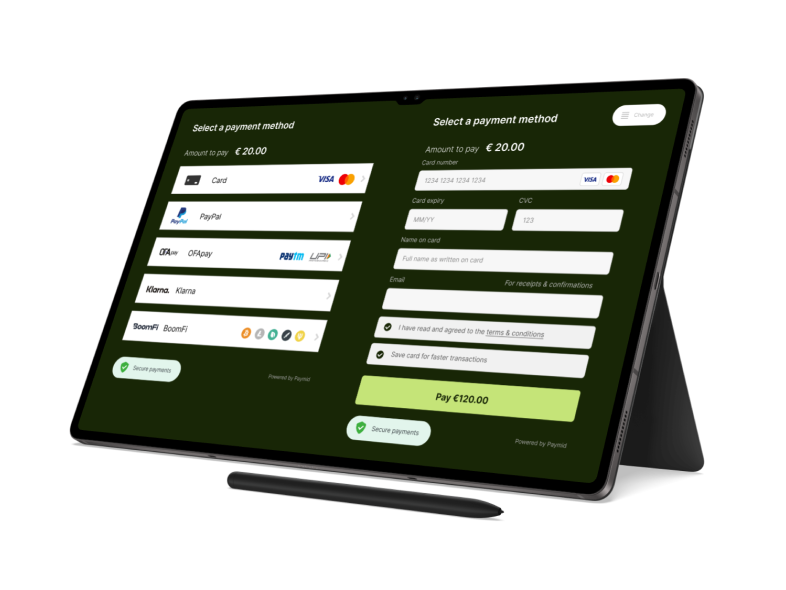


SaaS Payment Stack: Building Scalable Billing Infrastructure

Building a successful SaaS business requires more than just great software—it demands a payment infrastructure that scales seamlessly with your growth. From handling the first $1,000 in MRR to processing millions in annual recurring revenue, your billing system can either accelerate expansion or become a crippling bottleneck.
The SaaS Payment Stack: Core Components
Payment Gateway: The Transaction Foundation
Payment gateways serve as the entry point for all customer transactions, encrypting sensitive data and routing it to appropriate processors. For SaaS companies, gateway selection impacts authorization rates, international expansion capabilities, and customer experience.
Key Considerations for SaaS:
- Multi-currency support: Essential for global SaaS expansion
- Subscription billing APIs: Native support for recurring payment workflows
- 3D Secure handling: Balancing fraud prevention with conversion optimization
- Tokenization: Secure storage of payment credentials for frictionless renewals
Subscription Management: The Recurring Revenue Engine
Unlike e-commerce businesses, SaaS companies live and die by their ability to manage recurring billing relationships. Subscription management platforms handle the intricate logic of plans, billing cycles, upgrades, downgrades, proration, and dunning management.
Critical Functionality:
- Flexible plan modeling: Support for seat-based, usage-based, and hybrid pricing
- Proration calculations: Accurate billing when customers change plans mid-cycle
- Trial management: Sophisticated handling of free trials and freemium conversions
- Dunning workflows: Automated retry logic for failed payments
Architecture Patterns for Scaling SaaS Billing
The Monolithic Stage ($0-$1M ARR)
Early-stage SaaS companies benefit from simplicity. A single payment provider handling both gateway and subscription functions keeps engineering overhead minimal.
Recommended Approach:
- Single provider (typically Stripe) for gateway, billing, and basic subscription management
- Webhook-driven event handling for payment lifecycle management
- Simple dunning with 3-4 retry attempts over 2 weeks
- Basic reporting through provider dashboards
The Growth Stage ($1M-$10M ARR)
At this stage, billing complexity increases dramatically. Multiple pricing tiers, international customers, and enterprise requirements demand more sophisticated infrastructure.
Key Architectural Changes:
- Gateway abstraction layer: Payment orchestration to route transactions optimally across multiple processors
- Dedicated subscription management: Specialized platform handling complex billing scenarios
- Regional payment methods: Local payment method integration for international expansion
- Advanced dunning: Machine learning-powered retry optimization
The Scale Stage ($10M+ ARR)
Enterprise SaaS companies require payment infrastructure that handles massive volume, complex pricing models, and global regulatory compliance.
Enterprise Requirements:
- Multi-gateway redundancy: Automatic failover with transaction volume balancing
- Usage-based billing: Real-time metering and rating for consumption pricing
- Contract management: Integration with CPQ systems
- Global tax compliance: Automated tax calculation and remittance
- Revenue operations: Sophisticated analytics connecting billing to customer success
Handling SaaS-Specific Payment Challenges
The Dunning Management Imperative
Failed payments represent existential risk for SaaS businesses. Unlike e-commerce where a declined card means a lost sale, SaaS companies face ongoing revenue leakage from payment failures. Industry data shows 15-20% of SaaS churn stems from involuntary payment failures.
Sophisticated Dunning Strategies:
- Smart retry timing: Analyzing historical patterns to retry when cards are most likely to work
- Card updater services: Automatic updates when customers receive new cards
- Pre-dunning outreach: Proactive communication before payment methods expire
- Grace periods: Temporary service continuation while resolving payment issues
International Expansion Considerations
Global SaaS growth introduces payment complexity that domestic-only companies never face. Each market brings unique requirements around payment methods, currencies, and regulations.
International Payment Stack Requirements:
- Local acquiring: Processing transactions through regional banks to improve authorization rates
- Currency management: Supporting 20+ currencies with appropriate hedging strategies
- Regional payment methods: iDEAL for Netherlands, UPI for India, PIX for Brazil
- Regulatory compliance: PCI DSS, GDPR, PSD2, and market-specific requirements
- Tax automation: VAT, GST, and sales tax calculation and remittance
Security and Compliance in SaaS Billing
PCI DSS Compliance Strategy
The Payment Card Industry Data Security Standard applies to any organization handling cardholder data. For SaaS companies, compliance strategy varies based on architecture.
Compliance Approaches:
- Fully outsourced: Using hosted payment pages (SAQ A)
- Tokenization: Storing only non-sensitive tokens (SAQ A-EP)
- Direct integration: Managing card data within company infrastructure (SAQ D)
Performance Optimization Strategies
Authorization Rate Optimization
Every failed authorization represents lost revenue. SaaS companies should systematically optimize approval rates across multiple dimensions.
Optimization Tactics:
- Network tokenization: Using network-provided tokens instead of raw card numbers
- Intelligent routing: Directing transactions to optimal processors based on historical performance
- Retry logic: Smart cascading across multiple gateways for soft declines
- Authentication timing: Requesting 3D Secure only when necessary
The Future of SaaS Payment Infrastructure
Embedded Finance Integration
Payment infrastructure increasingly embeds within broader financial services. SaaS platforms are becoming financial platforms, offering banking, lending, and insurance alongside core products.
Usage-Based Billing Evolution
The trend toward consumption pricing models demands infrastructure that traditional subscription billing systems cannot provide. Real-time metering, rating engines, and hybrid models are becoming essential.
AI-Powered Payment Intelligence
Artificial intelligence transforms payment operations from reactive to predictive, identifying issues before they impact revenue through predictive dunning, dynamic routing, and fraud prediction.
Conclusion: Infrastructure as Growth Enabler
Your payment stack is either accelerating growth or constraining it—there’s no neutral option. Growth-stage SaaS companies must architect billing infrastructure that handles today’s complexity while scaling seamlessly into tomorrow’s opportunities.
The companies winning in SaaS don’t view payments as a cost center—they see optimized billing infrastructure as a competitive advantage. From authorization rate optimization to international expansion capabilities, payment excellence directly translates to revenue growth and customer retention.
As you evaluate your current payment architecture, ask: Is your billing system ready for 10x growth? Can you enter new markets without months of integration work? Are you capturing every possible dollar of recurring revenue?
Ready to optimize your SaaS payment infrastructure? Contact Paymid to learn how our payment orchestration platform helps growth-stage SaaS companies scale billing without scaling complexity.

Matt Star
Matt Star is a Financial Markets professional with over 25 years experience across Institutional markets, Margin Forex, CFDs and Crypto. Located in Sydney, Matt is a well experienced and valued partner in Paymid Limited.