

What is Payment Orchestration? The Complete Guide for 2026

What is Payment Orchestration? The Complete Guide for 2026
Payment orchestration has emerged as the critical infrastructure layer that separates leading digital businesses from those struggling with fragmented payment operations. With over $12 trillion in digital commerce transactions processed globally in 2026, the difference between a 95% and 85% payment success rate can mean hundreds of millions in revenue for large merchants—and for smaller businesses, it can determine survival.
This comprehensive guide explains everything you need to know about payment orchestration: what it is, how it works, why it matters, and how to implement it for your business. Whether you’re managing payments for an e-commerce empire, a SaaS platform, or a high-risk industry, understanding payment orchestration is no longer optional—it’s a competitive necessity.
What Is Payment Orchestration? A Clear Definition
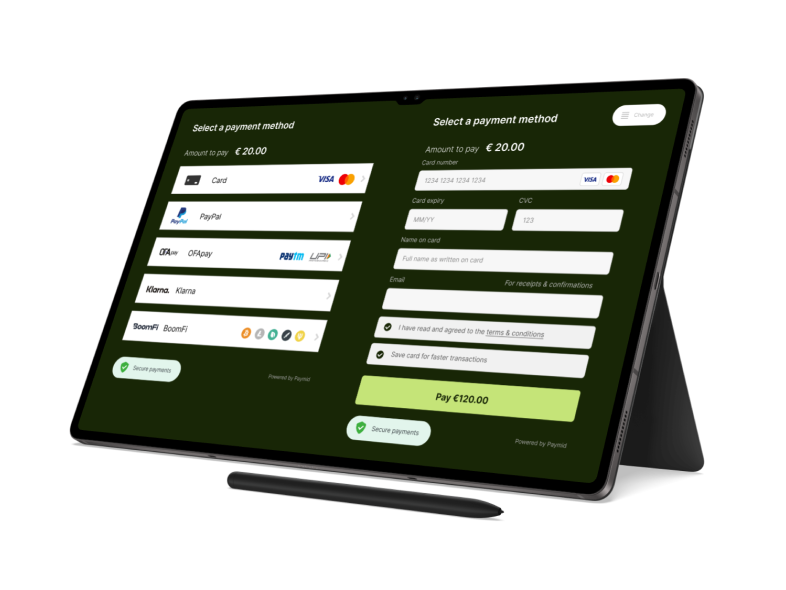
Payment orchestration is the technology layer that unifies multiple payment service providers (PSPs), payment methods, and transaction routing logic into a single, intelligent system. Rather than managing separate integrations with Stripe, Adyen, PayPal, and dozens of local payment providers, merchants use a payment orchestration platform as a single integration point that handles everything.
Think of payment orchestration as the “air traffic control” for your payment operations. Just as air traffic controllers direct planes to the optimal runways based on weather, traffic, and plane characteristics, payment orchestration routes each transaction to the best-performing provider based on dozens of real-time factors.
The Core Components of Payment Orchestration
A complete payment orchestration platform includes:
- Unified API Layer: Single integration point for all payment operations
- Intelligent Routing Engine: AI-powered decision-making for transaction routing
- Multi-Provider Management: Seamless handling of multiple PSP relationships
- Cascading/Failover Logic: Automatic retry with backup providers
- Unified Analytics: Cross-provider reporting and insights
- Token Vault: Secure storage of payment credentials across providers
- 3D Secure Orchestration: Dynamic authentication management
- Compliance Management: PCI DSS, PSD2, and regional regulation handling
How Payment Orchestration Works: The Technical Flow
Step 1: Transaction Entry
When a customer initiates payment, the orchestration platform captures transaction data including amount, currency, card type, customer location, device information, and merchant category. This data forms the input for routing decisions.
Step 2: Intelligent Routing Decision
The orchestration engine analyzes 40+ data points to determine optimal routing:
- Card Characteristics: Type (credit/debit), issuing bank, BIN range, country of issue
- Transaction Context: Amount, currency, time of day, customer history
- Provider Performance: Real-time authorization rates, latency, uptime status
- Cost Optimization: Interchange fees, scheme fees, provider-specific costs
- Risk Indicators: Fraud scores, 3DS requirements, velocity checks
- Geographic Rules: Local regulations, preferred local acquirers
Step 3: Provider Communication
The transaction is formatted according to the selected provider’s specifications and transmitted via secure APIs. The orchestration layer handles all protocol differences, authentication, and encryption requirements.
Step 4: Response Handling
When the provider responds, the orchestration platform normalizes the response—converting different decline codes, response formats, and status messages into a consistent format for the merchant.
Step 5: Cascading (If Needed)
If a transaction is declined, the orchestration platform analyzes the decline reason. For soft declines (temporary issues like network timeouts or issuer unavailability), it automatically retries with the same or different provider using optimized parameters.
Step 6: Analytics Recording
Transaction details, routing decisions, and outcomes are recorded for real-time analytics and long-term optimization. Machine learning models continuously improve routing decisions based on this data.
Payment Orchestration vs. Payment Gateway: Understanding the Difference
One of the most common questions is how payment orchestration differs from a payment gateway. While both handle payment processing, they serve fundamentally different purposes.
| Feature | Payment Gateway | Payment Orchestration |
|---|---|---|
| Primary Function | Connect merchant to single processor | Manage multiple gateways/providers |
| Integration Point | Merchant → Gateway → Processor | Merchant → Orchestration → Multiple Processors |
| Routing Intelligence | Basic routing (if any) | AI-powered intelligent routing |
| Failover Capability | Limited or none | Automatic cascading across providers |
| Provider Lock-in | High switching costs | Provider-agnostic, easy switching |
| Analytics Scope | Single provider view | Cross-provider unified analytics |
| Token Portability | Locked to provider | Universal network tokens |
| Best For | Simple, single-region businesses | Complex, multi-region, high-volume merchants |
Can You Use Both?
Absolutely. Many businesses use payment orchestration to manage multiple payment gateways. This hybrid approach provides both the specialized capabilities of best-in-class gateways and the coordination benefits of orchestration.
The Business Case for Payment Orchestration: Why It Matters
1. Increased Authorization Rates
The most immediate benefit of payment orchestration is higher transaction approval rates. By routing transactions to the optimal provider based on real-time performance data, merchants typically see 2-8% improvement in authorization rates.
For a merchant processing $100 million annually, a 3% improvement in authorization rates translates to $3 million in recovered revenue—often with minimal additional cost.
2. Reduced Payment Failures Through Cascading
Network outages, processor downtime, and issuer system maintenance cause unavoidable payment failures. Payment orchestration’s cascading capability automatically retries failed transactions with backup providers, converting up to 15% of failed payments into successful transactions.
3. Cost Optimization
Different providers charge different rates based on card type, transaction characteristics, and geographic factors. Intelligent routing can direct transactions to the most cost-effective provider while maintaining authorization rate targets.
Typical cost savings include:
- Interchange optimization: 0.1-0.3% per transaction
- Scheme fee reduction: 0.05-0.15% per transaction
- FX optimization: 0.5-2% on international transactions
4. Global Expansion Acceleration
Expanding into new markets traditionally requires months of integration work with local payment providers. Payment orchestration platforms come pre-integrated with 700+ payment methods across 190+ countries, reducing market launch time from months to days.
5. Business Continuity and Risk Mitigation
Relying on a single payment provider creates existential business risk. Payment orchestration provides redundancy—if your primary provider experiences an outage, transactions automatically route to alternatives without merchant intervention or customer impact.
6. Unified Analytics and Insights
Without orchestration, understanding payment performance requires logging into multiple provider dashboards, exporting data, and manually combining reports. Payment orchestration provides a single source of truth for:
- Authorization rates by provider, region, and card type
- Cost analysis across all payment methods
- Customer behavior patterns
- Fraud and decline analysis
Who Needs Payment Orchestration?
High-Volume E-commerce Businesses
Merchants processing $10M+ annually with significant transaction volumes benefit immediately from authorization rate improvements and cost optimization. Every basis point of improvement translates to substantial revenue impact.
Global Businesses
Companies operating in multiple countries face complexity around local payment methods, currency conversion, and regional regulations. Payment orchestration abstracts this complexity while optimizing for local performance.
SaaS and Subscription Businesses
Recurring billing requires specialized handling of failed payments, card updates, and dunning management. Payment orchestration provides intelligent retry logic and network tokenization that significantly reduces involuntary churn.
High-Risk Industries
Gambling, forex, crypto, and adult industries face provider restrictions and higher scrutiny. Payment orchestration distributes risk across multiple providers and provides redundancy when relationships change.
Marketplaces and Platforms
Multi-party payment flows—split payments, vendor payouts, escrow—require sophisticated orchestration. Payment orchestration platforms provide the infrastructure for complex money movement.
Key Features to Look for in a Payment Orchestration Platform
1. Intelligent Routing Engine
Look for AI-powered routing that considers:
- Real-time provider performance
- Historical authorization patterns
- Cost optimization constraints
- Risk-based rules
2. Comprehensive Provider Network
The best platforms offer pre-built integrations with:
- Major global gateways (Stripe, Adyen, Braintree)
- Regional specialists (dozens of local providers)
- Alternative payment methods (wallets, BNPL, crypto)
- Bank transfer systems (SEPA, ACH, PIX, UPI)
3. Sophisticated Cascading Logic
Not all declines should trigger retries. Look for cascading that:
- Distinguishes soft vs. hard declines
- Respects retry limits and timing rules
- Optimizes retry parameters
- Provides visibility into recovery rates
4. Network Tokenization
Network tokens issued by card networks provide:
- Higher authorization rates (2-6% improvement)
- Automatic card updates (reducing expiry failures)
- Enhanced security (PCI scope reduction)
- Cross-provider portability
5. Dynamic 3D Secure
3D Secure authentication impacts both fraud and conversion. Look for orchestration that:
- Applies risk-based authentication
- Supports exemptions for low-risk transactions
- Handles 3DS version differences
- Minimizes friction for legitimate customers
6. Comprehensive Analytics
Essential reporting capabilities include:
- Real-time transaction monitoring
- Provider performance comparison
- Geographic analysis
- Decline reason categorization
- Cost breakdown by provider and method
Real-World Payment Orchestration Results
Case Study 1: E-commerce Platform
A mid-market fashion retailer processing $50M annually implemented payment orchestration and achieved:
- 4.2% increase in authorization rates
- $2.1M additional annual revenue
- 35% reduction in payment-related customer service tickets
- Launch in 12 new countries within 90 days
Case Study 2: SaaS Company
A B2B software company struggling with involuntary churn saw:
- 28% reduction in failed recurring payments
- Network tokenization eliminated 90% of card expiry issues
- Intelligent retry logic recovered 22% of initially failed payments
- 3% improvement in net revenue retention
Case Study 3: High-Risk Gaming Platform
An online gaming operator facing provider instability achieved:
- 99.97% uptime through provider redundancy
- Zero disruption during primary provider outages
- 15+ provider relationships managed through single integration
- 40% faster new market expansion
Implementing Payment Orchestration: A Step-by-Step Guide
Phase 1: Assessment and Planning (Weeks 1-2)
- Audit Current State
- Map all existing payment providers and integrations
- Analyze authorization rates by provider and region
- Identify pain points and failure modes
- Calculate cost of payment failures
- Define Requirements
- Required payment methods by market
- Integration requirements (API, hosted fields, redirect)
- Compliance needs (PCI level, regional regulations)
- Reporting and analytics requirements
- Provider Selection
- Evaluate orchestration platforms against requirements
- Assess integration complexity
- Compare pricing models
- Check provider network coverage
Phase 2: Technical Integration (Weeks 3-6)
- Sandbox Development
- Set up test environment
- Implement API integration
- Configure routing rules
- Test tokenization workflows
- Testing
- Functional testing of all payment flows
- Authorization rate benchmarking
- Cascading and failover testing
- 3D Secure flow validation
- Migration Planning
- Token migration strategy
- Customer communication plan
- Rollback procedures
- Gradual rollout approach
Phase 3: Go-Live and Optimization (Weeks 7-8)
- Soft Launch
- Route small percentage of traffic
- Monitor performance closely
- Compare against baseline
- Adjust routing rules
- Full Deployment
- Gradually increase traffic percentage
- Monitor provider performance
- Optimize routing decisions
- Train customer service teams
- Continuous Optimization
- Weekly performance reviews
- A/B testing of routing strategies
- Provider relationship management
- Expansion into new markets
Common Payment Orchestration Challenges and Solutions
Challenge 1: Provider Management Complexity
Problem: Managing contracts, settlements, and relationships with multiple providers creates operational overhead.
Solution: Choose orchestration platforms that offer provider management services, unified settlement, and consolidated reporting.
Challenge 2: Token Migration
Problem: Moving stored payment credentials from existing providers to the orchestration platform.
Solution: Look for platforms supporting network tokenization and bulk migration tools. Many can import tokens from major providers.
Challenge 3: Routing Optimization
Problem: Determining optimal routing rules requires extensive data analysis.
Solution: Start with basic rules (geography, card type) and evolve to AI-powered routing as data accumulates.
Challenge 4: 3D Secure Complexity
Problem: Managing authentication across providers with different 3DS implementations.
Solution: Use orchestration platforms with built-in 3DS orchestration that abstracts provider differences.
The Future of Payment Orchestration
AI and Machine Learning Evolution
Next-generation orchestration platforms use deep learning models that analyze thousands of variables to optimize routing decisions in real-time. These systems continuously learn from transaction outcomes to improve performance.
Real-Time Payment Integration
As real-time payment systems proliferate globally (FedNow, SEPA Instant, PIX, UPI), orchestration platforms are expanding to coordinate between traditional card payments and account-to-account transfers.
Embedded Finance Orchestration
Payment orchestration is expanding beyond checkout to support embedded finance use cases: marketplace payouts, supplier payments, payroll, and cross-border remittances.
Regulatory Automation
Future orchestration platforms will increasingly automate compliance with evolving regulations: PSD3 in Europe, state-by-state compliance in the US, and emerging frameworks in Asia and Africa.
Conclusion: The Payment Orchestration Imperative
Payment orchestration has evolved from a technical luxury to a business necessity for any organization serious about digital commerce. The combination of higher authorization rates, reduced costs, improved reliability, and accelerated global expansion creates a compelling ROI that justifies investment.
For businesses currently managing multiple payment providers through separate integrations, the question isn’t whether to implement orchestration—it’s how quickly you can deploy it to capture the benefits. Every day of delay represents lost revenue from suboptimal routing, failed payments, and missed expansion opportunities.
The good news is that modern orchestration platforms have made implementation faster and easier than ever. With pre-built integrations, AI-powered routing, and comprehensive analytics, businesses can go live in weeks rather than months.
As digital commerce continues to grow and payment complexity increases, payment orchestration will become the standard infrastructure layer—just as CDNs became standard for content delivery and cloud computing became standard for infrastructure. The businesses that adopt early will build sustainable competitive advantages that compound over time.
Key Takeaways
- Payment orchestration unifies multiple providers into a single, intelligent system
- Typical improvements include 2-8% higher authorization rates and 15% failure recovery
- Essential for global businesses, high-volume merchants, and complex payment flows
- Implementation can be completed in 6-8 weeks with modern platforms
- The ROI from recovered revenue typically exceeds platform costs within months
Ready to optimize your payment infrastructure? Contact Paymid to learn how our payment orchestration platform helps merchants process payments more efficiently, reduce costs, and expand globally with confidence.
Paymid’s payment orchestration platform provides intelligent routing, cascading payments, network tokenization, and unified analytics across 700+ payment methods and 190+ countries—accessible through a single API integration.
Related Reading:

Matt Star
Matt Star is a Financial Markets professional with over 25 years experience across Institutional markets, Margin Forex, CFDs and Crypto. Located in Sydney, Matt is a well experienced and valued partner in Paymid Limited.