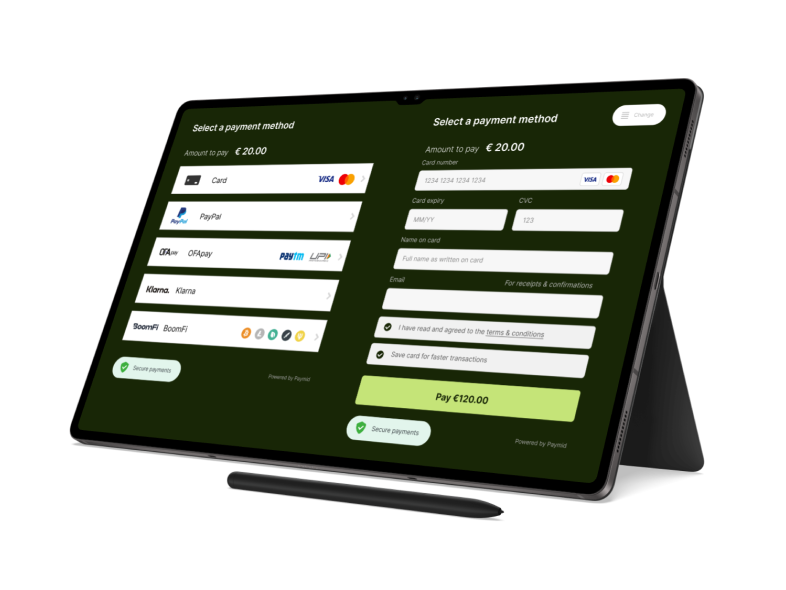


Building vs Buying Payment Orchestration: The 2026 Decision Framework

The decision between building a payment orchestration platform in-house versus buying a pre-built solution has become one of the most critical strategic choices facing fintech leaders and enterprise merchants in 2026. As the payment orchestration landscape continues to evolve at breakneck speed, organizations must carefully weigh the true costs, benefits, and long-term implications of each approach.
When Building Makes Sense
There are specific scenarios where building your own payment orchestration infrastructure is not just viable—it may be the optimal choice. Large-scale enterprises with highly unique transaction flows, stringent regulatory requirements, or existing sophisticated payment infrastructures sometimes benefit from a custom-built solution.
Organizations should consider building when:
- Proprietary transaction logic is required – If your business model involves complex, unique routing algorithms that differ significantly from industry standards, a custom build might be necessary.
- Complete data sovereignty is mandatory – Certain industries like defense, government contracting, or highly regulated financial services may require 100% control over payment data with zero third-party access.
- Existing infrastructure can be leveraged – Companies that have already invested heavily in custom payment gateways and gateway integrations may find extending existing systems more cost-effective than migration.
- Long-term strategic differentiation – For some tech-forward companies, payment infrastructure itself is viewed as a competitive advantage and core IP worth developing internally.
However, these scenarios are increasingly rare. The rapid advancement of AI-driven routing, real-time fraud detection, and multi-processor management has made building from scratch exponentially more complex than it was even three years ago.
The True Cost of Building
Organizations consistently underestimate the total cost of ownership (TCO) when building payment orchestration platforms. The expenses extend far beyond initial development.
Initial Development Costs
A comprehensive payment orchestration platform requires:
- Engineering team – 8-15 senior engineers for 12-18 months minimum ($1.5M–$3M in salaries alone)
- Payment processor integrations – Each integration requires 2-4 weeks of specialized work; supporting 20+ processors means 40-80 weeks of integration effort
- Security and compliance – PCI DSS Level 1 certification costs $200K–$500K annually, plus SOC 2, GDPR, and regional compliance requirements
- Infrastructure setup – Multi-region deployments, redundancy systems, and monitoring tools ($100K–$300K setup)
Ongoing Operational Expenses
The costs don’t stop at launch. Annual operating expenses typically include:
- Engineering maintenance team (4-8 engineers): $800K–$1.6M annually
- Compliance audits and certifications: $300K–$600K annually
- Infrastructure and hosting: $200K–$500K annually (scaling with volume)
- Security updates and vulnerability management: $150K–$300K annually
- New processor integrations as business expands: $50K–$100K per processor
Real-world TCO for a built solution over 5 years: $8M–$15M—and this doesn’t account for the opportunity cost of diverting engineering talent from core business initiatives.
Time to Market Comparison
In the fast-moving fintech landscape, time-to-market can determine competitive success or failure. The delta between building and buying is stark:
| Phase | Build Timeline | Buy Timeline |
|---|---|---|
| Initial development/integration | 12-18 months | 2-4 weeks |
| Security certification | 6-9 months | Immediate (inherited) |
| First processor integration | 2-4 weeks | 1-2 days |
| Additional processors (20+) | 40-80 weeks | Same-day activation |
| AI routing implementation | 6-12 months | Immediate |
| Total time to full operation | 18-30 months | 1-2 months |
This 15-28 month difference represents significant lost revenue opportunity. While competitors leveraging AI-powered payment orchestration capture market share with optimized routing and reduced failed transactions, organizations building in-house remain in development.
Maintenance Considerations
Payment orchestration isn’t a “set it and forget it” system—it requires constant evolution and maintenance.
The Ever-Changing Payment Landscape
Payment infrastructure requires continuous updates for:
- Processor API changes – Payment providers update their APIs 2-4 times annually, requiring integration updates
- New payment methods – The global payment method landscape expands constantly, from BNPL options to real-time bank transfers and cryptocurrencies
- Regulatory compliance – PSD3, open banking regulations, and evolving PCI DSS standards require ongoing attention
- Security threats – New fraud vectors and attack methods demand continuous security enhancements
Technical Debt Accumulation
Internal payment systems often suffer from accumulating technical debt:
- Documentation gaps as original developers leave
- Legacy code dependencies that become difficult to update
- Testing coverage that degrades over time
- Infrastructure that struggles to scale with transaction volume
Vendors specializing in payment orchestration absorb these maintenance burdens across their entire customer base, distributing costs and ensuring every client benefits from continuous improvements.
When Buying Is Better
For the vast majority of organizations, buying a payment orchestration solution delivers superior outcomes across multiple dimensions:
Immediate Access to Advanced Capabilities
Modern payment orchestration platforms come equipped with sophisticated features that would take years to replicate:
- Intelligent routing algorithms – AI-driven transaction routing that optimizes for cost, success rate, and speed
- Global processor network – Pre-built connections to 100+ payment processors worldwide
- Real-time analytics – Comprehensive dashboards and reporting without custom development
- Fraud prevention integration – Built-in connections to leading fraud detection services
- Multi-currency support – Automatic currency conversion and localization
Risk Mitigation
Buying transfers significant risk to the vendor:
- Compliance burden – Vendors maintain PCI DSS, SOC 2, and regional certifications
- Uptime responsibility – SLA-backed availability guarantees (typically 99.99%+)
- Security management – Professional security teams monitoring 24/7
- Regulatory adaptation – Vendors track and implement regulatory changes across jurisdictions
Scalability Without Friction
As transaction volumes grow, purchased solutions scale seamlessly:
- Auto-scaling infrastructure handles peak loads without engineering intervention
- Performance optimization happens continuously in the background
- New regions and markets can be activated instantly
- No need to provision additional servers or hire infrastructure specialists
Hybrid Approaches
Some organizations benefit from hybrid strategies that blend building and buying:
Custom Layer on Orchestration Core
This approach involves purchasing a robust orchestration platform as the foundation while building custom business logic layers on top. Benefits include:
- Fast time-to-market for core payment capabilities
- Ability to implement proprietary routing rules and business logic
- Reduced compliance burden while maintaining differentiation
- Lower total cost than full custom build
Gradual Migration Strategy
For organizations with existing payment infrastructure, a phased approach works well:
- Start with non-critical transaction flows on the purchased platform
- Gradually migrate volume while maintaining existing systems as backup
- Eventually decommission legacy infrastructure once confidence is established
- This approach minimizes risk while accelerating benefits realization
ROI Analysis: The Numbers Don’t Lie
When evaluating build versus buy decisions, organizations should consider several ROI dimensions:
Direct Cost Comparison (5-Year TCO)
| Cost Category | Build | Buy |
|---|---|---|
| Initial development/setup | $2.0M – $3.5M | $50K – $150K |
| Annual operating costs | $1.5M – $3.0M | $200K – $500K |
| Compliance/certification | $1.5M – $3.0M | $0 (included) |
| Opportunity cost (delayed revenue) | $2.0M – $10M* | $0 |
| 5-Year Total | $12M – $28M | $1.1M – $2.7M |
Revenue Impact
Beyond cost savings, buying delivers faster revenue impact:
- Faster time to improved authorization rates – AI-powered routing typically improves success rates by 5-15%, translating to millions in recovered revenue
- Immediate global expansion capability – Access to 700+ payment methods enables new market entry without development delays
- Reduced churn from payment failures – Lower failed transaction rates directly improve customer retention
Break-Even Analysis
For most organizations, the break-even point favors buying:
- A $200M annual transaction volume merchant typically breaks even on a purchased solution within 3-6 months through improved success rates alone
- The cost of a 12-month delay in implementing smart routing often exceeds the entire 5-year cost of a purchased solution
- Engineering resources freed from payment infrastructure can be redirected to core business innovation
The 2026 Decision Framework
When evaluating your payment orchestration strategy, use this framework:
Build IF:
- Payment infrastructure is genuinely a core competitive differentiator
- You have unique, non-standard transaction flows that can’t be accommodated by existing solutions
- You have the capital and organizational commitment for a 3-5 year investment
- Data sovereignty requirements absolutely preclude third-party involvement
- You can absorb 18-30 months of delayed optimization benefits
Buy IF:
- You want to optimize payment performance quickly
- Your engineering resources are better spent on core business features
- You need global payment coverage without integration complexity
- You want enterprise-grade security and compliance without the overhead
- You need to scale transaction volume without infrastructure concerns
- You value continuous innovation without ongoing development costs
The reality is that for 90%+ of organizations in 2026, buying a specialized payment orchestration platform delivers superior ROI, faster time-to-value, and lower risk than building in-house. The sophistication gap between custom-built solutions and modern orchestration platforms continues to widen as AI, machine learning, and global payment networks become increasingly complex.
Conclusion
The build versus buy decision for payment orchestration in 2026 isn’t just about technology—it’s about strategic focus. Organizations that recognize payment orchestration as a specialized capability best delivered by dedicated vendors can redirect their resources toward core business innovation while benefiting from world-class payment performance immediately.
Before committing to a multi-million dollar, multi-year build project, consider whether your organization would benefit more from immediate access to advanced payment orchestration capabilities, proven AI-driven routing, and global processor connectivity. For most, the answer will be clear: buy the capability, build your business.
Ready to explore how payment orchestration can transform your payment performance? Contact Paymid to learn how our platform delivers enterprise-grade orchestration without the enterprise-grade development timeline.

Matt Star
Matt Star is a Financial Markets professional with over 25 years experience across Institutional markets, Margin Forex, CFDs and Crypto. Located in Sydney, Matt is a well experienced and valued partner in Paymid Limited.