


Payment Analytics: Using Data to Optimize Transaction Performance
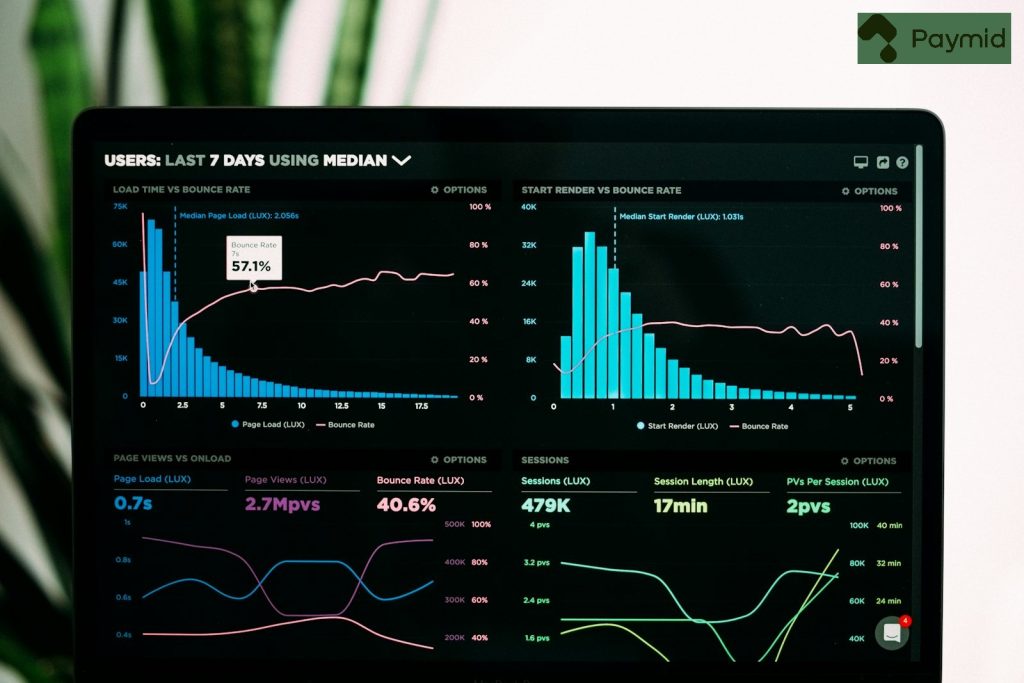
In the high-stakes world of digital commerce, every transaction tells a story. Payment analytics transforms raw transaction data into actionable intelligence—revealing hidden revenue opportunities, identifying costly failure patterns, and providing the insights needed to optimize every aspect of your payment performance. For businesses processing millions in annual revenue, even marginal improvements in authorization rates can translate to seven-figure gains.
This comprehensive guide explores how leading merchants leverage payment analytics to maximize revenue, reduce costs, and deliver superior customer experiences. From real-time dashboards to predictive modeling, we’ll show you how to turn payment data into your most valuable competitive advantage.
What Is Payment Analytics?
Payment analytics is the practice of collecting, analyzing, and acting upon data generated throughout the payment lifecycle. Unlike general business intelligence, payment analytics focuses specifically on transaction-level data—authorization rates, decline codes, processing costs, fraud patterns, and customer payment behaviors.
The Data Goldmine
Every payment transaction generates dozens of data points:
- Transaction details: Amount, currency, payment method, card type
- Authorization data: Approval/decline status, decline codes, response times
- Routing information: Which provider processed the transaction
- Fraud signals: Risk scores, 3D Secure results, device fingerprinting
- Customer behavior: Checkout completion rates, retry patterns, payment preferences
- Cost metrics: Interchange fees, processor markups, failed transaction costs
- Geographic data: Issuing country, processing region, cross-border indicators
- Temporal patterns: Time of day, day of week, seasonal trends
From Raw Data to Revenue Intelligence
The magic happens when you transform this raw data into actionable insights:
- Aggregation: Collect data from all payment providers into a unified view
- Normalization: Standardize formats and currencies for consistent analysis
- Enrichment: Add context like customer segments, product categories, and marketing campaigns
- Visualization: Present data in intuitive dashboards and reports
- Activation: Use insights to trigger automated optimizations and manual interventions
Key Payment Metrics Every Business Should Track
Authorization Rate
Definition: The percentage of payment attempts that are successfully authorized by the issuing bank.
Industry Benchmarks:
- E-commerce average: 85-88%
- Subscription/SaaS: 88-92%
- Physical retail: 92-95%
- Best-in-class: 95%+
Why It Matters: A 1% improvement in authorization rate for a $50M business means $500K in additional annual revenue. Common causes of low authorization rates include routing to suboptimal providers, excessive fraud filtering, and poor retry logic.
Decline Code Analysis
Soft Declines vs Hard Declines:
- Soft Declines (temporary, retryable): Insufficient funds, issuer timeout, system error
- Hard Declines (permanent): Invalid card, lost/stolen, account closed
Key Insight: 15-25% of declined transactions are soft declines that can be recovered through smart retry strategies. Payment analytics identifies which decline codes represent recoverable opportunities.
Transaction Cost Analysis
Components to Track:
- Interchange fees (varies by card type, region, merchant category)
- Processor markup and gateway fees
- Cross-border fees (typically 1-2% additional)
- Currency conversion spreads
- Failed transaction costs (authorization fees on declines)
Optimization Opportunity: Multi-provider orchestration can reduce transaction costs by 15-30% through intelligent provider selection based on cost, performance, and regional optimization.
Fraud Rate and False Positives
Critical Balance:
- Too lenient = revenue lost to fraud
- Too strict = revenue lost to false declines
Metrics to Monitor:
- Fraud rate (chargebacks as % of transactions)
- False positive rate (legitimate transactions blocked)
- Review rate (transactions requiring manual review)
- 3D Secure challenge rate vs completion rate
Building a Payment Analytics Dashboard
Essential Dashboard Components
1. Executive Summary View
- Total payment volume and transaction count
- Authorization rate trend (daily/weekly/monthly)
- Revenue at risk from declined transactions
- Month-over-month growth metrics
2. Provider Performance Comparison
- Side-by-side authorization rates by provider
- Average processing costs per provider
- Response time and uptime metrics
- Geographic performance heatmaps
3. Decline Analysis Deep-Dive
- Decline code distribution (pie chart)
- Soft vs hard decline trends
- Retry success rates
- Revenue recovery from retry logic
Technology Stack Options
Option 1: Payment Orchestration Platform (Recommended)
Platforms like Paymid include comprehensive analytics dashboards out of the box:
- Unified data from all providers
- Pre-built KPIs and visualizations
- Real-time monitoring and alerts
- No additional engineering required
Option 2: Custom BI Solution
Build on existing data warehouse infrastructure:
- ETL pipelines from payment providers
- Custom dashboard development (Tableau, Looker, Power BI)
- Full flexibility but significant engineering investment
Advanced Payment Analytics Techniques
1. Predictive Authorization Modeling
Concept: Use machine learning to predict authorization probability before routing.
How It Works:
- Analyze historical authorization patterns
- Identify factors correlating with approvals/declines
- Build predictive models for each provider
- Route transactions to provider with highest predicted success rate
Results: 3-8% improvement in authorization rates beyond basic routing.
2. Intelligent Retry Optimization
Smart Retry Logic:
- Analyze which decline codes respond to retries
- Determine optimal timing between retry attempts
- Test different providers for retry attempts
Best Practices:
- Retry soft declines only
- Wait 15-60 minutes between attempts
- Try different providers on subsequent attempts
- Limit to 2-3 retry attempts maximum
3. Geographic and Regional Analysis
Cross-Border Optimization:
- Identify which providers perform best in each region
- Analyze currency conversion cost variations
- Track local payment method preferences
Case Study: A global SaaS company discovered that routing European transactions through a regional processor improved authorization rates by 12% compared to their US-based primary provider.
Real-World Analytics Success Stories
Case Study 1: E-commerce Marketplace
Challenge: 87% authorization rate with $2M monthly revenue loss from declines
Analytics Implementation:
- Deployed comprehensive payment analytics dashboard
- Identified 60% of declines were soft declines from a single provider
- Discovered geographic routing inefficiencies
Results:
- Authorization rate improved to 93%
- Monthly recovered revenue: $360,000
- Annual impact: $4.3M additional revenue
Case Study 2: SaaS Subscription Platform
Challenge: 22% involuntary churn from failed subscription payments
Optimization Strategy:
- Implemented network tokenization for automatic card updates
- Deployed intelligent retry logic with optimized timing
- Spread billing dates across the month
Results:
- Involuntary churn reduced to 8%
- Customer lifetime value increased by $180
- Annual revenue retention improvement: $2.1M
The ROI of Payment Analytics
Direct Revenue Impact
Authorization Rate Improvements:
- Typical improvement: 2-5%
- For $50M business: $1M – $2.5M annual revenue gain
- Implementation cost: $50K – $200K annually
- ROI: 500% – 5000%
Retry Recovery:
- Typical recovery rate: 15-25% of soft declines
- Monthly recovery: $50K – $200K for mid-market businesses
Cost Optimization
Provider Selection:
- Cost reduction: 15-30% through intelligent routing
- Example: $10M processing volume → $150K – $300K savings
Conclusion: Data-Driven Payment Excellence
Payment analytics transforms payment processing from a cost center into a strategic advantage. By understanding the story hidden in your transaction data, you can:
- Recover millions in revenue through authorization rate optimization
- Reduce processing costs by 15-30% through intelligent routing
- Improve customer experience with seamless payment flows
- Prevent fraud losses while minimizing false declines
- Make strategic decisions based on data, not guesswork
Key Takeaways
- Start measuring: You can’t optimize what you don’t measure. Begin tracking authorization rates, decline codes, and processing costs immediately.
- Unify your data: Single-provider analytics gives a partial picture. Aggregate data from all payment sources for complete visibility.
- Act on insights: Analytics without action is just expensive reporting. Implement smart routing, retry logic, and automated optimizations.
- Invest in real-time: Monthly reports miss critical issues. Real-time dashboards with automated alerts prevent revenue loss.
- Think strategically: Payment analytics informs broader business decisions—market expansion, product pricing, and customer segmentation.
Ready to unlock the power of payment analytics? Contact Paymid to learn how our payment orchestration platform provides comprehensive analytics, real-time monitoring, and intelligent optimization—all from a single integration.
Paymid combines 700+ payment methods, intelligent routing, and advanced analytics in one unified platform. Track every metric that matters, recover lost revenue, and optimize payment performance with our comprehensive dashboard and automated optimization tools.

Matt Star
Matt Star is a Financial Markets professional with over 25 years experience across Institutional markets, Margin Forex, CFDs and Crypto. Located in Sydney, Matt is a well experienced and valued partner in Paymid Limited.