

Payment Orchestration vs Payment Gateway: What’s the Difference?
Introduction
When building an online business, accepting payments is one of the most critical decisions you’ll make. But the payment landscape is filled with jargon that can confuse even experienced merchants. Two terms that often get mixed up are payment gateways and payment orchestration.
Understanding the difference isn’t just academic—it can significantly impact your conversion rates, operational costs, and ability to scale globally. This guide breaks down exactly what each term means, how they differ, and which solution is right for your business.
Payment Orchestration vs Payment Gateway: At a Glance
| Feature | Payment Gateway | Payment Orchestration |
|---|---|---|
| Primary Function | Process single transactions | Manage multiple payment providers |
| Provider Connections | One provider per integration | Multiple providers through one integration |
| Smart Routing | ❌ Not available | ✅ Intelligent routing by transaction |
| Automatic Retries | ❌ Manual handling required | ✅ Cascading/failover built-in |
| Payment Methods | Limited to gateway’s options | 700+ methods across providers |
| Best For | Small businesses, single markets | Scaling businesses, global expansion |
What is a Payment Gateway?
A payment gateway is a service that securely transmits payment data between your website and your payment processor/bank. Think of it as the digital equivalent of a card reader at a physical store.
How Payment Gateways Work
- Customer enters card details on your checkout page
- Gateway encrypts and securely transmits the data
- Gateway sends data to the acquiring bank/processor
- Bank approves or declines the transaction
- Response travels back through gateway to your site
- Customer sees success or failure message
Popular Payment Gateways
- Stripe – Developer-friendly with robust APIs
- PayPal – Trusted brand with consumer recognition
- Adyen – Enterprise-focused with global coverage
- Braintree – PayPal-owned with good mobile support
- Authorize.Net – Long-established, widely supported
Limitations of Payment Gateways
While gateways are essential, they come with constraints:
- Single Point of Failure – If your gateway goes down, you can’t accept payments
- Limited Payment Methods – You’re restricted to what that gateway supports
- Fixed Routing – All transactions go through the same path regardless of success rates
- Regional Limitations – Expanding to new markets often requires additional integrations
- No Automatic Recovery – Failed transactions stay failed unless manually retried
What is Payment Orchestration?
Payment orchestration is a layer of technology that sits above multiple payment gateways and processors, intelligently managing transactions across them. Instead of integrating with one gateway, you integrate once with an orchestration platform that connects to many.
How Payment Orchestration Works
- Customer initiates checkout on your site
- Orchestration layer analyzes transaction data (amount, currency, card type, location)
- AI-powered routing selects the optimal provider
- If first provider fails, transaction automatically cascades to backup
- Success rates are monitored and routing rules optimized
- Unified reporting shows performance across all providers
Key Features of Payment Orchestration
1. Intelligent Payment Routing
Our intelligent payment routing analyzes 40+ data points to send each transaction to the provider most likely to approve it. This can increase authorization rates by 15-30%.
2. Smart Retry Logic
When transactions fail, orchestration platforms automatically retry with optimized parameters or route to backup providers. This reduces failed payments and recovers up to 15% more revenue.
3. Access to 700+ Payment Methods
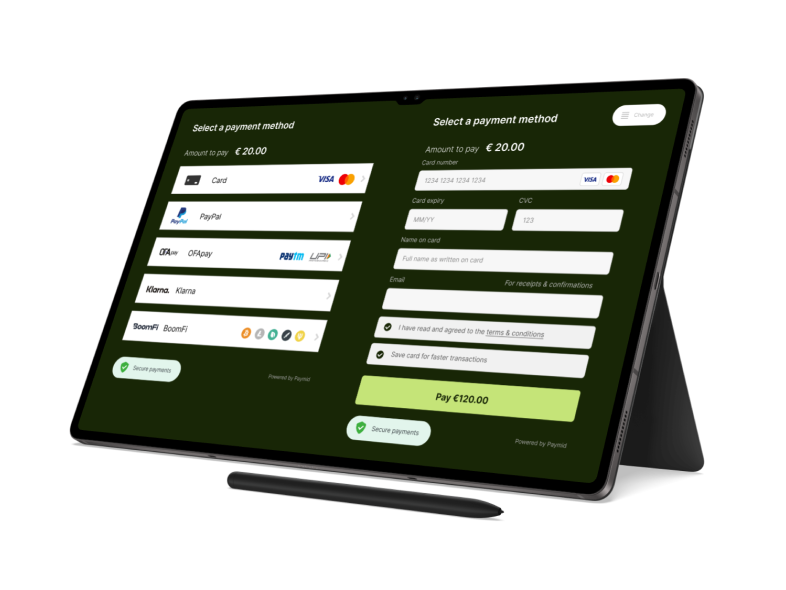
Through orchestration, you can offer the ultimate list of 700+ payment methods globally without managing hundreds of individual integrations.
4. Cascading Payments
Cascading payments ensure that if one provider declines a transaction, it automatically tries another. This failover protection means you never lose a sale due to provider issues.
When to Use a Payment Gateway
A standalone payment gateway makes sense if:
✅ You’re Just Starting Out
If you’re processing under $100K annually, a single gateway like Stripe or PayPal is usually sufficient. The complexity of orchestration may not be worth it yet.
✅ You Operate in One Market
Businesses focused on a single country with local customers often don’t need the geographic flexibility orchestration provides.
✅ Simple Product/Service
If you sell a straightforward digital product or service with consistent pricing, gateway limitations won’t hurt you much.
✅ Limited Technical Resources
A quick Stripe integration can be done in hours. Full orchestration implementation takes more planning.
When to Use Payment Orchestration
Consider payment orchestration when:
✅ You’re Scaling Globally
Expanding to new markets requires local payment methods. Orchestration gives you instant access to iDEAL in the Netherlands, PIX in Brazil, UPI in India, and hundreds more.
✅ High Transaction Volume
At scale, a 5% improvement in authorization rates can mean millions in additional revenue. Orchestration optimization pays for itself.
✅ You Need Redundancy
Payment downtime is expensive. Orchestration provides automatic failover so if one provider has issues, transactions flow to another.
✅ Multiple Business Units
Enterprises with different brands or regions can manage everything through a single orchestration layer while routing to optimal local providers.
✅ High-Risk Industries
Gambling, forex, and crypto businesses often need multiple PSP relationships. Orchestration makes this manageable.
Can They Work Together?
Absolutely. In fact, payment orchestration typically includes gateway functionality. Think of it this way:
- Payment Gateway = One road from point A to point B
- Payment Orchestration = A smart traffic system that can route you across multiple roads, choosing the fastest path and automatically rerouting if there’s a blockage
Most businesses using orchestration still interact with payment gateways—the orchestration layer just manages multiple gateway relationships for them.
Decision Framework: Which Do You Need?
Choose a Payment Gateway If:
- Monthly volume under $100K
- Operating in 1-2 countries
- Standard card payments are sufficient
- Need to launch quickly with minimal setup
- Budget is constrained
Recommended: Stripe, PayPal, or Square
Choose Payment Orchestration If:
- Monthly volume over $500K
- Expanding to 5+ countries
- Need 20+ local payment methods
- Authorization rates matter to your bottom line
- Can’t afford payment downtime
- Processing in high-risk categories
Recommended: Paymid for comprehensive orchestration
The Hidden Costs of Sticking with a Single Gateway
Many businesses outgrow their gateway without realizing it. Here are the hidden costs:
| Cost Category | Single Gateway | With Orchestration |
|---|---|---|
| Failed Transactions | 15-20% failure rate | <5% with smart routing |
| Cart Abandonment | 70% (missing local methods) | 45% (local preferences supported) |
| Downtime Cost | $300K/hour (no failover) | Minimal (automatic backup) |
| Integration Time | 3-6 months per new market | 1-2 weeks via orchestration |
Real-World Example: E-commerce Growth
Consider a fashion retailer growing from local to global:
Phase 1: Local Market ($50K/month)
Uses Stripe. Simple, effective. 95% of transactions are domestic cards.
Phase 2: European Expansion ($300K/month)
Now needs iDEAL (Netherlands), Bancontact (Belgium), SOFORT (Germany). Stripe supports some but not all. Must integrate additional providers. Engineering team spends 3 months on integrations.
Phase 3: Global Scale ($2M/month)
Wants to add PIX for Brazil, UPI for India, local wallets for Southeast Asia. Also experiencing 18% failure rates on international cards. Payment downtime during Black Friday costs $150K.
Solution: Implement orchestration. One integration replaces 8 separate ones. Smart routing improves authorization rates to 94%. Automatic cascading prevents downtime losses.
Conclusion
Payment gateways and payment orchestration serve different needs at different stages of business growth.
Start with a gateway when you’re small and focused. But as you scale—especially internationally—payment orchestration becomes essential infrastructure. The ability to route intelligently, access local payment methods, and maintain uptime isn’t a luxury; it’s a competitive necessity.
The good news? You don’t have to rebuild everything. Modern orchestration platforms like Paymid integrate seamlessly with your existing setup, adding a layer of intelligence without disrupting what’s working.
Ready to Explore Payment Orchestration?
If you’re processing significant volume or planning global expansion, it’s time to look beyond single gateways. Learn more about Paymid’s payment orchestration platform or contact our team for a personalized assessment.
Related Resources:
- What is Payment Orchestration? The Complete Guide
- How Payment Routing Improves Transaction Success Rates
- 7 Ways Payment Orchestration Reduces Failed Transactions
- Cascading Payments Explained: Never Lose a Sale Again
Last updated: February 2026
Paymid enables businesses to accept 700+ payment methods globally through intelligent payment orchestration. Get started today.

Matt Star
Matt Star is a Financial Markets professional with over 25 years experience across Institutional markets, Margin Forex, CFDs and Crypto. Located in Sydney, Matt is a well experienced and valued partner in Paymid Limited.